Context
Amber Travel is a destination management company with over two decades of experience working with international B2B partners. The collaboration began in 2013 with the delivery of a WordPress site that matched the company’s direction at the time.
Over the following decade, the business focus shifted towards tailor-made programmes, accessible travel solutions, and MICE work for partners looking for a reliable local operator.
The website remained operational, but the structure no longer reflected how Amber Travel actually works or how B2B partners evaluate options and move towards an enquiry.
The actual problem
The issue was not technology. It was structural misalignment between the website and the real business model.
Tour programmes followed an inherited structure that no longer matched B2B enquiry logic.
Core offerings such as accessible travel and MICE were not positioned clearly within the journey.
Managing multilingual content required too many steps for a small internal team.
The website contained information, but it did not guide partners towards a concrete enquiry.
Content existed, but it was not organised around decision-making.
Constraints and trade-offs
The site needed to remain lightweight, fast, and straightforward to maintain without adding technical complexity.
It also had to support growth in both programme volume and languages without requiring repeated structural refactoring.
The internal team needed to manage day-to-day updates independently, without relying on a developer.
There was no operational case for page builders or heavy themes that would slow down content work and increase long-term technical debt.
Structural clarity took priority over visual effects.
Key structural decisions
Work began with content analysis and an explicit review of how B2B partners actually search, scan, compare, and decide before any visual work was considered.
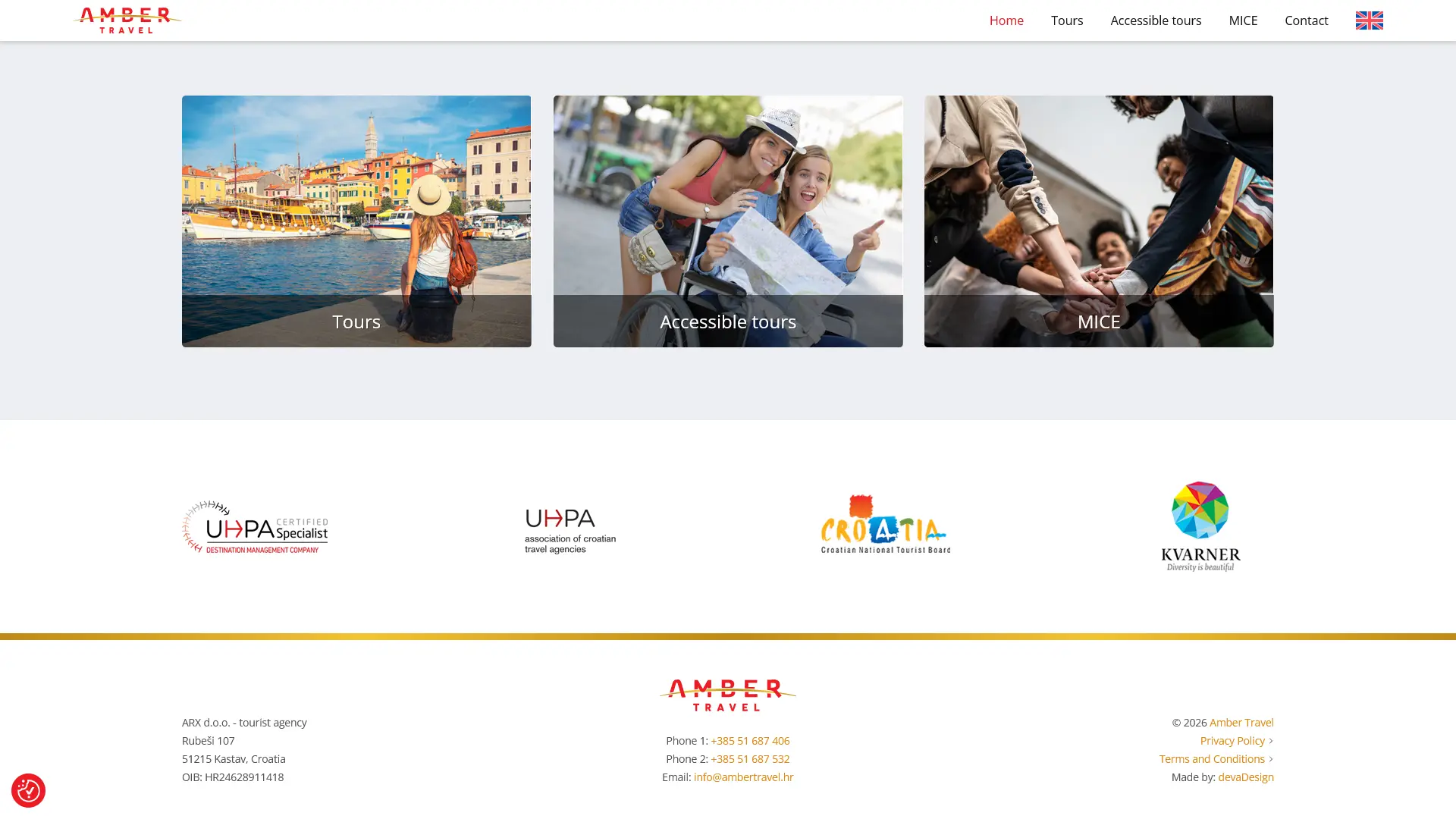
The information architecture was reduced to a small set of durable sections: clear DMC positioning, an overview of core programme lines, a dedicated accessible travel area, and a separate MICE segment.
Pages follow a consistent structural pattern to support quick scanning and comparison.
A custom WordPress theme was implemented without page builders, with repeatable blocks and a minimal plugin footprint.
Multilingual content was structured so that adding new languages or programmes does not increase operational overhead.
Complex one-off layouts and campaign pages were excluded to preserve long-term consistency and reduce future maintenance cost.
Resulting system and long-term value
The result is a website that communicates what Amber Travel does and how it operates without requiring additional explanation. Partners reach relevant programme areas in a small number of steps and use the site as a structured entry point for tailored enquiries.
The internal team can add new tours, update content, and manage multilingual versions without technical assistance. The structure remains legible and stable as the programme catalogue grows.
This work reflects the long-term value of systems that evolve responsibly. The platform launched in 2013 was restructured into a new iteration in 2023 without shortcuts, because the underlying logic continued to mirror how the client actually operates.
If this evidence matches what you need, start with the qualification criteria.